
XMR Price Dips 15% Amid Persistent Monero Delistings
Monero plummeted by roughly 15% following KuCoin's announcement that it is delisting XMR, shutting down all four spot trading pairs and halting deposits as major exchanges continue to drop the privacy asset.


Key takeaways
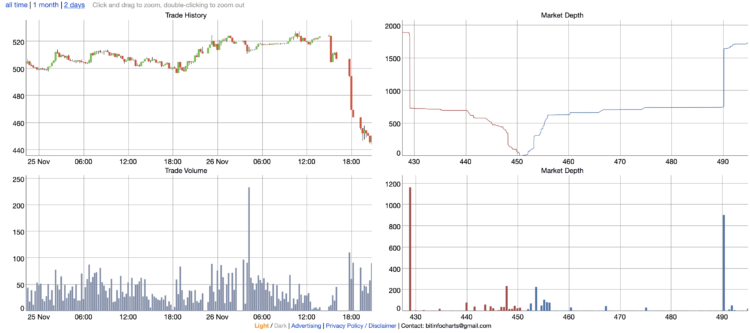
- Monero plummeted by roughly 15% on Thursday, dropping from $525.36 down to $446.54 according to BitInfoCharts, following KuCoin’s announcement that it is delisting XMR.
- KuCoin will shut down all four XMR spot trading pairs on November 30 at 08:00 UTC, with deposits already halted and withdrawals remaining open until December 31.
- XMR will also no longer qualify as collateral for VIP loans, meaning borrowers may need to supply alternative collateral to prevent liquidation.
- KuCoin stands as the most active venue for XMR—registering about $62.6 million in 24-hour volume for the XMR/USDT pair via CoinGecko—following earlier exits by MEXC, Binance, and Kraken EEA.
- While the network itself is independent of KuCoin, its liquidity certainly is not: observers should track where volume shifts and how much slippage persists on surviving exchanges.
Monero (XMR) shed approximately 15% of its market value within a span of less than five hours on Thursday after KuCoin revealed plans to remove the privacy asset from its platform. This move arrives just nine days after competing exchange MEXC pulled the plug on XMR spot trading, further narrowing the choices for investors dealing in one of the cryptocurrency sector’s top privacy tokens.
Figures provided by BitInfoCharts indicate that Monero slid from $525.36 to $446.54 over the course of Thursday’s session. For seasoned XMR supporters, the sudden sell-off serves as an uneasy echo of Binance’s decision to delist Monero back in February 2024.
However, the roster of major exchanges still accessible to Monero traders is now noticeably shorter than it was during past market shifts.
KuCoin Gives Monero Traders Four Days Before Trading Ends
Via a November 26 announcement, KuCoin verified that it will strip away all four Monero spot trading pairs—against USDT, USDC, ETH, and BTC—on November 30 at 08:00 UTC.
The exchange has already halted XMR deposits with no plans to reinstate them. Withdrawals are slated to remain active until December 31 at 08:00 UTC, though KuCoin retains the authority to close them down earlier if network-related complications emerge.
Monero’s removal extends beyond simple spot markets. KuCoin plans to terminate XMR flexible savings on November 27, followed by its conversion and automated trading tools on November 30.
Another crucial element of the announcement requires immediate attention: KuCoin will cease accepting XMR as collateral for VIP loan offerings. Clients who have borrowed funds against their Monero holdings might need to deposit alternate collateral to steer clear of liquidation.
For participants opting to leave their coins on the exchange until the withdrawal cutoff, KuCoin cautioned that any remaining balances could be converted into stablecoins, although it noted that “such conversion is not guaranteed.”
The trading platform attributed the choice to its internal policies without pointing to any specific regulatory mandate driving the decision.
Monero’s Liquidity Problem Is Getting Harder To Ignore
While KuCoin is not the initial exchange to drop Monero this month, its exit carries substantial weight given the heavy volume of XMR trading it processes.
A CoinGecko market snapshot from November 26 highlighted KuCoin as the leading exchange for Monero, with its XMR/USDT trading pair generating roughly $62.6 million in volume across a 24-hour cycle.
Earlier in the month, MEXC suspended spot trading for Monero on November 17. Meanwhile, Binance ousted the digital asset back in February 2024, and Kraken restricted XMR trading for users in the European Economic Area in October of that same year, pointing directly to regulatory shifts.
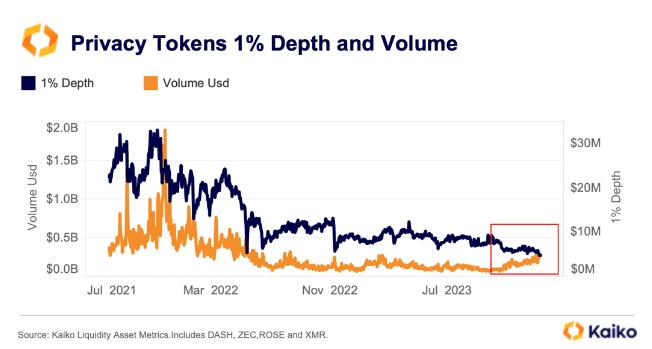
Kaiko’s retrospective research demonstrates how market depth and liquidity across privacy cryptocurrencies had already degraded by early 2024 following a cascade of platform restrictions.
Trading activity does not simply vanish when a centralized exchange delists a token. A portion will transition elsewhere, and investors determined to maintain their positions can shift funds to self-hosted wallets.
The primary concern is how effectively the remaining market venues can absorb that volume. If fewer platforms compete for identical order flows—especially during turbulent market conditions—large transactions may become costlier to execute and price fluctuations more severe.
For Monero, this is increasingly turning into a structural market challenge rather than an issue concerning the functionality of its core technology.
Can XMR Survive Another Major Exchange Exit?
Arguments can certainly be made against viewing Thursday’s sell-off as the prelude to a prolonged downward spiral.
Monero has weathered past delistings and even pushed toward fresh price peaks in 2026 despite intensifying constraints. As NewsBTC previously documented, XMR traded past $700 earlier this year long after Binance dropped support for its spot markets.
The asset’s underlying network relies in no way on KuCoin to clear transactions. Its usefulness as a privacy-centric payment protocol remains entirely distinct from its presence on mainstream centralized exchanges.
Even so, a functional network offers no absolute guarantee of a deep, liquid market. Investors still require accessible pathways to enter and exit positions without running into exorbitant trading fees.
Consequently, November 30 will serve as a crucial stress test for Monero. Rather than obsessing solely over whether XMR reclaims the $500 milestone, market participants should monitor where KuCoin’s departed volume travels and whether remaining exchanges can handle substantial orders without excessive slippage.
Such tracking will provide a clearer perspective on whether Thursday’s dip was a temporary knee-jerk reaction to another platform exit or a warning flag for a deeper liquidity crisis.
Short FAQs
Why did Monero’s price drop on Thursday?
Monero fell about 15%—from $525.36 to $446.54—after KuCoin announced it will delist XMR and end all four of its spot trading pairs.
When will KuCoin completely remove Monero spot trading?
KuCoin will terminate all four XMR spot pairs on November 30 at 08:00 UTC. Deposits are already halted, and withdrawals are scheduled to stay open until December 31.
What happens to XMR used in KuCoin VIP loans?
KuCoin is stopping the acceptance of XMR as collateral for its VIP loan products, meaning borrowers may need to provide alternative collateral to avoid liquidation.
Which other major exchanges have previously restricted Monero?
MEXC stopped Monero spot trading earlier in the month, Binance delisted the asset in February 2024, and Kraken halted XMR trading for EEA customers in October 2024.