Arca Opens Public Access to Pay Users for Unused AI Data
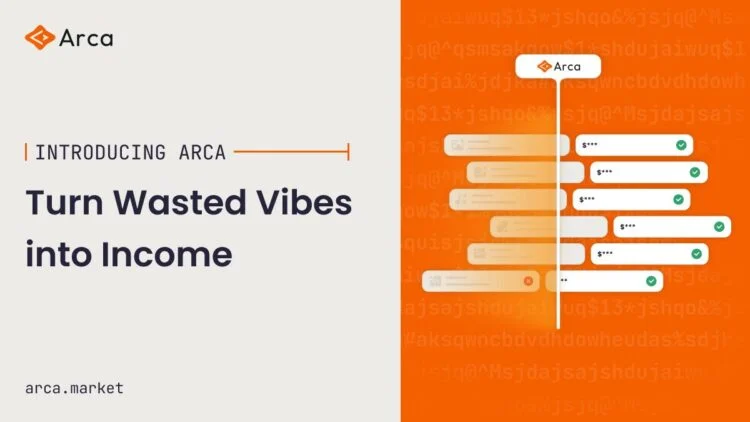
Arca, a desktop application developed by Brevis for Windows and Mac, is now publicly available. The platform compensates users for unused AI session histories after performing on-device anonymisation to protect sensitive information.

Following an invite-only early access period, the desktop application developed by the team behind Brevis is now available to all users on Windows and Mac.
HONG KONG, November 11, 2026: Arca, a fresh desktop utility created by the Brevis team, launched its public availability today. The platform compensates individuals for the artificial intelligence sessions they normally discard. By locating session histories already stored locally by AI tools, Arca allows users to select which records to submit. It scrubs sensitive information directly on the device prior to any upload, issuing payment for accepted sessions. Registration is open immediately to anyone via email, eliminating any need for invitations or waitlists.
A significant portion of modern knowledge work is conducted through AI applications. Users guide models through specific assignments, making corrections, discarding failures, and retaining successful outputs. Each of these interactions produces a comprehensive archive of authentic labor: the iterative dialogue, dead ends, and ultimate solutions. Thousands of these records accumulate locally on user machines, and once a project window closes, they hold zero value for the person who generated them. Arca assigns monetary worth to this labor.
How it works
Arca integrates with existing AI utilities utilized by workers, encompassing Cursor, Codex, Claude Code, and Claude Desktop. Upon installing the software, individuals can view historical and current sessions detected on their hardware. After selecting a session to upload, Arca processes an on-device anonymisation before anything departs the machine, subsequently displaying an estimated payout range. Participants can either confirm—sending the data forward for evaluation—or withdraw, which deletes the intended upload. Approved content results in weekly disbursements.
The software exclusively reads sessions already present on the user’s computer and generates a comprehensive inventory of its findings. Background uploads do not occur, and data never leaves the hardware until a user deliberately chooses a session and authorizes the action. Before transmission, Arca removes file paths, account identifiers, names, and keys, followed by supplementary anonymisation protocols executed on Arca’s infrastructure.
“Every AI session is a record of real thinking and real work, and until now the person who did that work got nothing for it,” stated Michael, CEO and co-founder of Brevis. “Arca lets people see what their sessions are worth and decide for themselves what to share. We opened it in small batches first to get the experience right. Today it’s open to everyone.”
Built for real work in any field
Arca is engineered for anyone performing authentic professional tasks using AI, ranging from contract reviews and programming to research and extensive working dialogues. Current eligible interactions include those with Fable and Claude Opus, alongside newer GPT models running via Codex, with additional options forthcoming. Extremely brief sessions are ineligible, and every contribution undergoes evaluation before compensation is issued. To bolster their profile and potentially increase session valuations, users have the option—though not the requirement—to link their GitHub accounts.
The application extends Brevis’s core principle of verifiable computing into a novel sector: items that can be verified carry greater value than those requiring blind trust.
Availability
Arca initially debuted on October 13 via an invite-exclusive early access phase, onboarding participants incrementally. Today’s release eliminates the invitation prerequisite. New users can register via a Google account or an email address to begin immediately. Provided free of charge, Arca is downloadable for Windows and Mac systems at arca.market.
Running through November 30, the Arca Launch Challenge provides an additional $10,000 in rewards distributed alongside standard earnings for approved submissions.
About Arca
Arca compensates individuals for the artificial intelligence sessions they would otherwise discard. The desktop software detects existing sessions maintained by AI applications, grants users control over what they share, anonymises data locally before uploading, and pays out for accepted records. Developed by the team behind Brevis, further details are available at arca.market.
About Brevis
Brevis constructs verifiable computing architecture. Its zero-knowledge proving technology—featuring the open-source Pico zkVM—enables applications to mathematically verify the outcomes of intricate computations. Learn more at brevis.network.
Media contact
Nicolas Tang
nicolas@brevis.network
Frequently Asked Questions
What is Arca?
Arca is a desktop application for Mac and Windows that compensates users for the AI sessions they typically discard by analyzing local session histories, anonymizing them on the device, and paying for approved submissions.
How does Arca protect my private data?
Arca only reviews sessions already stored on your computer and performs no background uploads. Before any data leaves your device, Arca strips names, file paths, keys, and account details, followed by secondary anonymization on its own servers.
Which AI tools are currently supported?
Arca supports popular tools like Claude Desktop, Claude Code, Cursor, and Codex, with sessions involving models like Fable and Claude Opus qualifying for submission.
How do I sign up and get started?
You can sign up immediately using an email address or a Google account with no waitlist or invite required, and download the free software for Mac or Windows at arca.market.