
Bitcoin ETFs See $201M in Outflows as Inflow Streak Ends
US spot Bitcoin exchange-traded funds recorded $201.9 million in net outflows on August 28, bringing an end to a nine-day streak of consecutive daily inflows and signaling a more cautious trading environment.

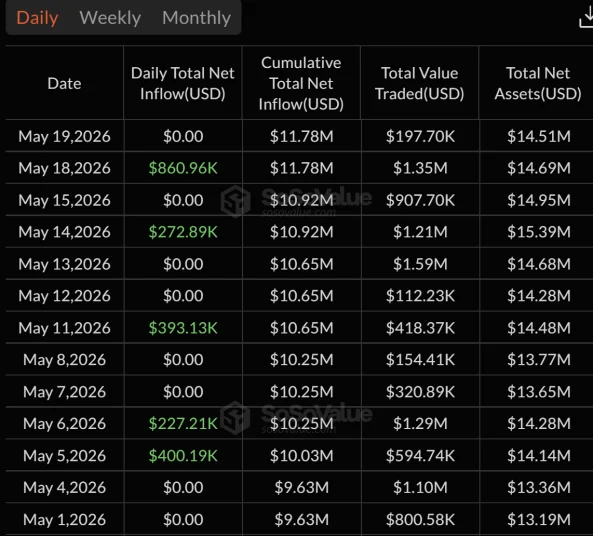
During the August 28 trading session, US spot Bitcoin exchange-traded funds experienced $201.9 million in net outflows, bringing a halt to a nine-day streak of inflows and offering a more cautious signal to traders following a robust period of ETF demand.
This withdrawal represents a departure from earlier sessions when spot Bitcoin ETF purchasing served as one of the most reliable pillars for market sentiment. While these funds do not encompass the entirety of the Bitcoin ecosystem, they function as one of the most transparent indicators of regulated investor interest.
Consequently, the interruption of this streak carries significance.
It fails to indicate a complete evaporation of institutional interest; rather, it signals that the market can no longer rely on unbroken daily ETF inflows as a short-term supportive tailwind.
Additional details are accessible through the official Farside platform.
TL;DR
- On August 28, US spot Bitcoin ETFs reported $201.9 million in net outflows.
- This movement concluded a streak of nine consecutive days of inflows.
- The withdrawal ought to be viewed as a single-day flow reversal rather than an indicator that ETF demand has failed.
Why ETF Flow Streaks Matter
Streaks in ETF flows help mold market sentiment.
When capital flows into these funds day after day, market participants view it as consistent participation from regulated investors. This dynamic can bolster prices, boost confidence, and provide bullish traders with a straightforward narrative: institutional money continues to buy.
Once that streak is broken, however, the narrative loses its simplicity.
A single day of net outflows does not erase prior gains or imply that long-term participants are exiting. Nevertheless, it demonstrates that ETF demand is capable of pausing, reversing, or turning more tactical.
Such shifts hold importance during phases of market volatility.
Daily Flows Need Precision
The figure of $201.9 million reflects a net outflow restricted to a single session.
This metric should not be confused with cumulative assets under management, long-term product interest, or overall institutional positioning. Daily flow statistics can fluctuate as a result of portfolio adjustments, basis trades, macroeconomic positioning, profit realization, or movements specific to individual funds.
For this reason, a single day’s data should not be over-interpreted.
The more critical inquiry is whether this outflow develops into an ongoing trend. Should the upcoming sessions revert to net inflows, August 28 will appear as a mere pause; if the outflows persist, the market may need to reevaluate near-term demand.
Bitcoin Still Has Multiple Demand Channels
Although ETF flows are significant, they do not dictate the entire market.
Demand for Bitcoin additionally originates from spot exchanges, corporate treasuries, derivatives positions, miners, long-term investors, retail purchasers, and global macroeconomic conditions. While ETF outflows can weigh on sentiment, they do not define the broader market structure.
Even so, ETFs remain crucial because they form the most visible channel within traditional finance.
It is precisely this visibility that drives traders to monitor them so closely.
What Could Have Driven The Outflow
A variety of factors can trigger ETF outflows.
Investors might choose to lock in profits following a price rally, institutions may rebalance portfolios at month-end, hedge funds could unwind basis trades, or macroeconomic anxieties might diminish risk tolerance. Furthermore, some withdrawals may stem from fund-specific developments rather than category-wide trends.
Without presuming a single definitive cause, the timing remains notable.
Because the outflow occurred in the wake of multiple positive sessions, certain investors may have opted to scale back exposure during market strength or in anticipation of upcoming macroeconomic uncertainty.
The Clean Read
Demand for Bitcoin ETFs has not vanished, but the phase of uninterrupted inflows has taken a break.
This serves as the primary practical takeaway from August 28. The market must now observe whether regulated demand makes a comeback or if these outflows signal the beginning of a softer market phase.
Traders will be paying close attention to the upcoming sessions.
Should inflows bounce back quickly, the overarching ETF bullish hypothesis stays intact. Should the outflows grow larger, Bitcoin might forfeit one of its most transparent narratives for short-term support.
For the time being, the nine-day streak has concluded, presenting the market with a fresh development to price in.
This article is based on public spot Bitcoin ETF flow data from Farside Investors.
This article was written by the News Desk and edited by Samuel Rae.
Short FAQs
How much were the net outflows for US spot Bitcoin ETFs on August 28?
US spot Bitcoin ETFs recorded $201.9 million in net outflows for the August 28 session.
Did the August 28 outflows end an inflow streak?
Yes, the outflow ended a nine-day inflow streak for the ETFs.
Does a single day of outflows mean institutional demand has vanished?
No, it does not mean institutional demand has vanished, but it does mean the market can no longer point to uninterrupted daily ETF inflows as a short-term tailwind.
Where does the public spot Bitcoin ETF flow data come from?
The article is based on public spot Bitcoin ETF flow data sourced from Farside Investors.