
Rapid Market Rally Wipes Out $110M in Crypto Short Positions
A rapid ten-minute crypto market rally wiped out approximately $110 million in short positions on October 2, creating a classic short squeeze driven by market leverage rather than a specific news catalyst.

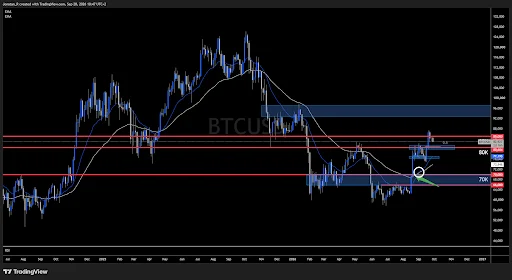
TL;DR
- Roughly $110 million in bearish crypto positions were wiped out during a rapid ten-minute rally on October 2.
- The sudden market movement focused heavily on short positions, establishing the classic mechanics of a short squeeze.
- Because no single verified news catalyst accounts for the burst, analysts should interpret the event through market leverage and positioning rather than a fabricated headline trigger.
Cryptocurrency traders received yet another stark reminder of how rapidly leverage can turn an ordinary price shift into a much more violent event.
Approximately $110 million in bearish bets were liquidated during a brief ten-minute window on October 2, coinciding with sharp upward movements across Bitcoin, Ethereum, and the broader digital asset market. The forced position closures fell overwhelmingly on the sell side.
That exact structural setup is capable of accelerating a rally well after it has already begun.
Shorts become buyers when the market moves against them
A leveraged short position generates profits when an underlying asset drops in value. Should the price climb sufficiently, exchanges will automatically close that trade to ensure losses do not surpass the available collateral.
Executing a short closure requires purchasing exposure back.
When a vast number of market participants hold identical positions, those forced buy orders can strike the market simultaneously. The initial price surge triggers liquidations, those liquidations generate extra buying pressure, and that buying can easily trigger subsequent layers of liquidations.
NewsBTC observed a similar self-reinforcing feedback loop back in August, when a Bitcoin short squeeze brought liquidation records back into the spotlight. While the precise scale varies per event, the core mechanism remains identical.
A liquidation burst does not explain the initial candle
Following a rapid market shift, the immediate temptation is linking the movement to whatever headline happens to be closest.
There is no necessity to do so in this instance.
The only verified components of the event are the recorded liquidation figures and the abrupt upward surge. Without a confirmed macroeconomic, regulatory, or corporate catalyst, attributing the squeeze to any specific news item would transform pure market speculation into factual reporting.
Market positioning alone can be entirely sufficient. Perpetual futures and alternative leveraged financial instruments frequently accumulate crowded trades, even during periods when spot markets appear relatively quiet. Large-scale onchain positions are likewise growing simpler to monitor; NewsBTC recently highlighted a $67 million Ethereum short position on Hyperliquid as a prime example of professional-grade risk migrating to transparent platforms.
ETF demand adds another layer to the flow picture
This squeeze also transpired just as United States spot Bitcoin exchange-traded funds (ETFs) transitioned back to positive daily net flows.
Those specific markets function differently from perpetual futures, though both heavily influence near-term liquidity conditions. Spot ETF share creations reflect organic demand for regulated Bitcoin exposure, whereas leveraged derivatives possess the power to amplify price fluctuations whenever traders face forced exits.
Recent ETF coverage from NewsBTC revealed significant issuer-level fluctuations, even on days displaying positive aggregate figures.
That exact combination explains why headline price candles rarely convey the entire story.
The leverage has been reset, not eliminated
A $110 million wipeout of short positions succeeds in clearing a portion of bearish leverage out of the ecosystem. However, this does not indicate that leverage has vanished altogether.
Traders can re-establish positions with great speed, and a market squeeze can easily be met with a sharp reversal should spot-market demand fail to persist.
For the present moment, the straightforward takeaway is clear: market positioning had grown crowded enough that a fast upward shove forced a massive volume of short exposure out of the market within minutes. Within crypto derivatives, that dynamic frequently supplies all the fuel a rally requires.
Short FAQs
- How much was lost in short positions during the October 2 rally?
- Approximately $110 million in bearish crypto positions were liquidated over a span of ten minutes.
- Was there a specific news trigger for the market event?
- No. There is no single verified macro, regulatory, or company catalyst; the event was driven by leverage and market positioning.
- How do short squeezes work in crypto derivatives?
- When rising prices force short traders out, exchanges automatically buy back exposure to close the trades. This forced buying creates a feedback loop that triggers even more liquidations.
- What role did spot Bitcoin ETFs play?
- The squeeze occurred as US spot Bitcoin ETFs returned to positive daily flows, adding another layer of liquidity and demand alongside leveraged derivatives.